What baker's percentage is
Baker's percentage, sometimes called baker's math, writes a recipe relative to its flour. The total flour is always 100%, and every other ingredient is its weight as a percentage of that flour. It is how professional bakers share formulas, because the percentages stay the same whether you bake one loaf or fifty.
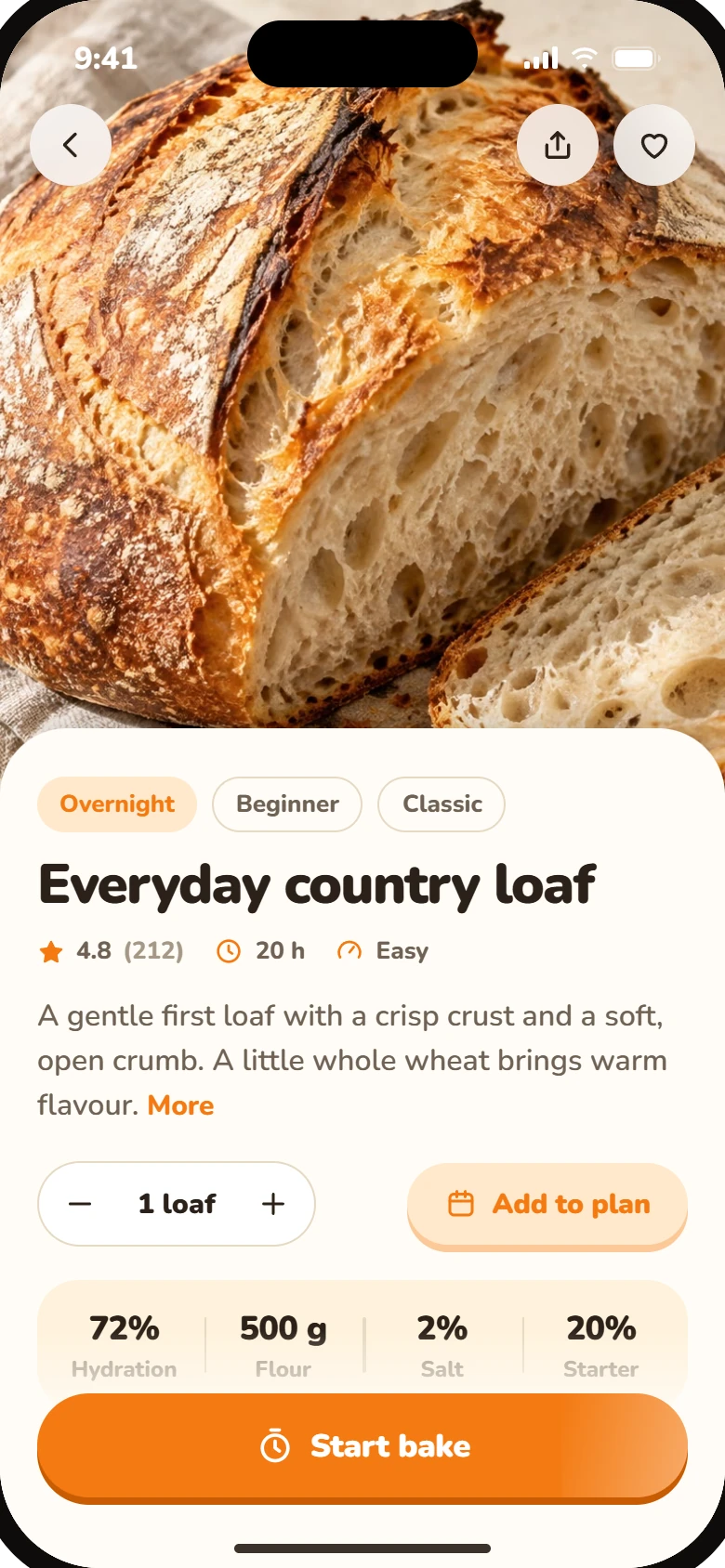
Here is the recipe loaded in the calculator, written both ways:
| Ingredient | Grams | Baker's % |
|---|---|---|
| Bread flour | 450 g | 90% |
| Whole wheat flour | 50 g | 10% |
| Water | 360 g | 72% |
| Starter | 100 g | 20% |
| Salt | 10 g | 2% |
| Total | 970 g | 194% |
The formula
Baker's % = ingredient weight ÷ total flour weight × 100
With 500 g of total flour, 360 g of water is 360 ÷ 500 × 100 = 72%. The water percentage is the dough's hydration, which is why bakers talk about a “72% dough”.
Typical baker's percentages for bread
| Ingredient | Typical range | What it does |
|---|---|---|
| Water | 60 to 80% | Sets how soft, sticky and open the dough is |
| Salt | 1.8 to 2.2% | Flavour, and a stronger, slower dough |
| Sourdough starter | 10 to 25% | Leavening and flavour; more is faster |
| Instant yeast | 0.5 to 1.5% | Leavening in yeasted breads |
| Whole grain flour | 10 to 30% of the flour | Flavour, and a thirstier dough |
Spotting something outside these ranges is often the quickest way to find a typo in a recipe, like 20 g of salt where 10 g was meant.
Scaling a recipe
- Work out the percentages, as the calculator does above.
- Decide on your new total flour or total dough weight.
- Multiply: new flour × each percentage gives each new weight.
To scale by dough weight instead, divide the dough weight you want by the total percentage (194% above, or 1.94) to get the flour, then carry on as before. The calculator's scaled column does both for you.
Baker's percentage and sourdough starter
Most recipes list the starter as its own ingredient, as the calculator does. But a starter is part flour and part water, so the dough is a little wetter than its water percentage alone suggests. For the real figure, use the hydration calculator, which counts the starter. To design a recipe from a target hydration and loaf size, try the sourdough calculator.