What a feeding ratio means
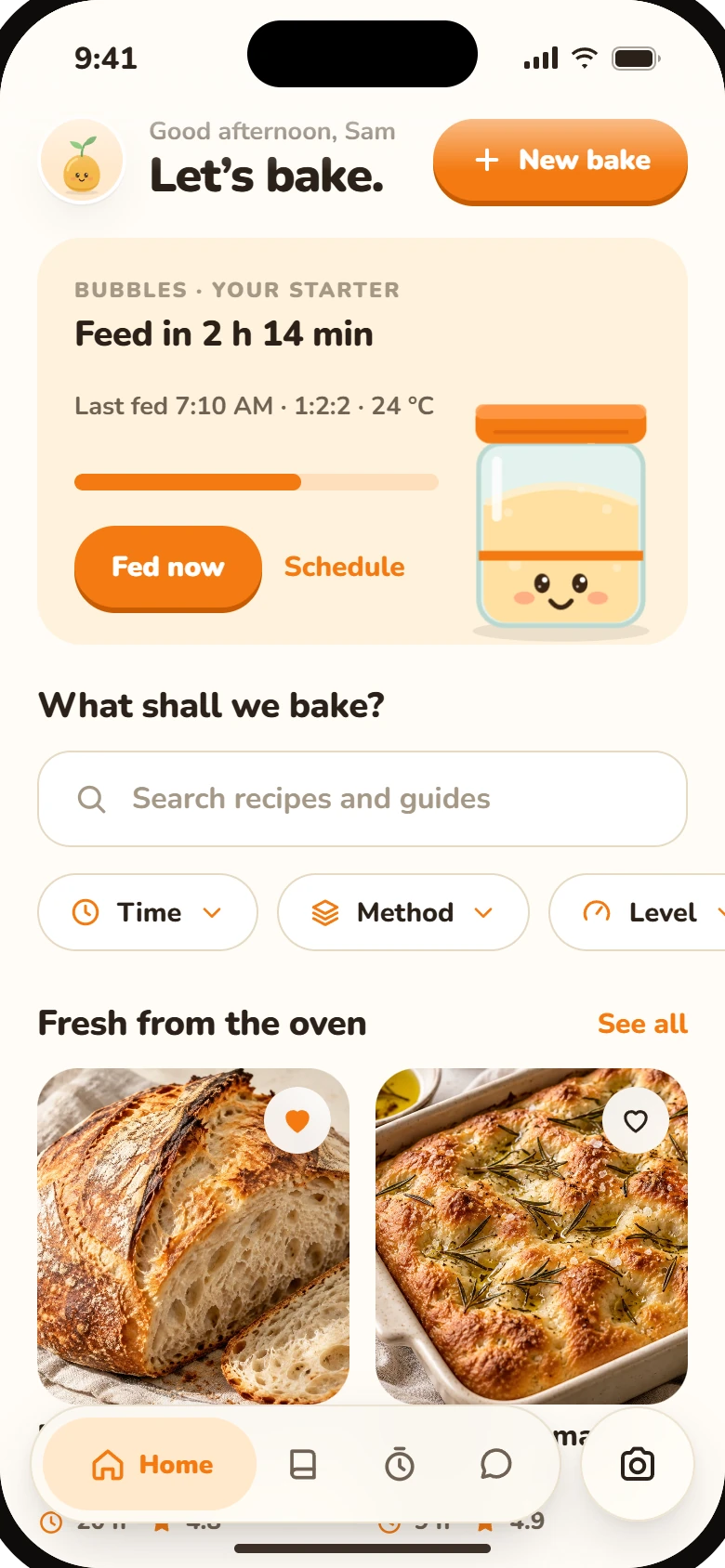
A feeding ratio is written as starter : flour : water, measured by weight. A 1:2:2 feed is one part starter, two parts flour and two parts water, so 25 g starter gets 50 g flour and 50 g water. Equal flour and water makes a starter at 100% hydration, the most common kind.
The bigger the second and third numbers, the more fresh food the yeast and bacteria get compared with how many of them there are. More food means it takes longer to eat through it, so a higher ratio slows the starter down and pushes its peak later. That is the whole trick: you pick the ratio to choose when it will be ready.
Which ratio to use
| Ratio | Rough time to peak at 75°F | Good for |
|---|---|---|
| 1:1:1 | 4 to 6 hours | Getting it ready the same day, or perking up a sluggish starter |
| 1:2:2 | 6 to 8 hours | Everyday feeding at room temperature |
| 1:3:3 | 7 to 10 hours | Feeding in the morning and baking in the evening |
| 1:5:5 | 8 to 12 hours | Feeding at night so it is ready in the morning |
| 1:10:10 | 12 hours or more | Warm kitchens, or when you need it to wait a long time |
These times are a starting point. Every starter is different, and temperature changes everything: the same feed can peak hours sooner on a hot day. Watch your jar for a few feeds, note when it peaks, and you will know which ratio suits your kitchen.
How often to feed a sourdough starter
- On the counter: once or twice a day. Feed it around when it peaks, or soon after. Warm kitchens may need two feeds a day or a higher ratio.
- In the fridge: about once a week is enough for most established starters. Cold slows it down so much that it needs far less attention.
- Before baking: give it one or two feeds at room temperature so it is lively, and use it at or near its peak.
Feeding a starter from the fridge
Take the jar out, let it warm a little, then discard down to the amount you want to keep and feed it at room temperature. A 1:2:2 or 1:1:1 feed works well. A starter that has been cold for a while may take an extra feed or two before it rises as strongly as usual, so give yourself a day before a bake.
How to tell when your starter has peaked
- It has at least doubled since feeding. A rubber band around the jar at the starting level helps.
- The top is domed or just starting to flatten.
- It is full of bubbles all the way through, not only on top.
- It smells pleasantly sour and yeasty, not sharp like nail polish remover.
If it has risen and fallen, it has passed its peak. That is fine for feeding; for baking, it is best used near the top. Once you know your starter's timing, the schedule planner can place the feed for you, and the sourdough calculator tells you how much starter your loaf needs.
Weigh, do not scoop
Starters are sticky and flour packs differently each time you scoop it, so cups give a different ratio every feed. A basic kitchen scale that reads in single grams is the most useful sourdough tool you can buy. Put the jar on the scale, press tare, and add each part in turn.